
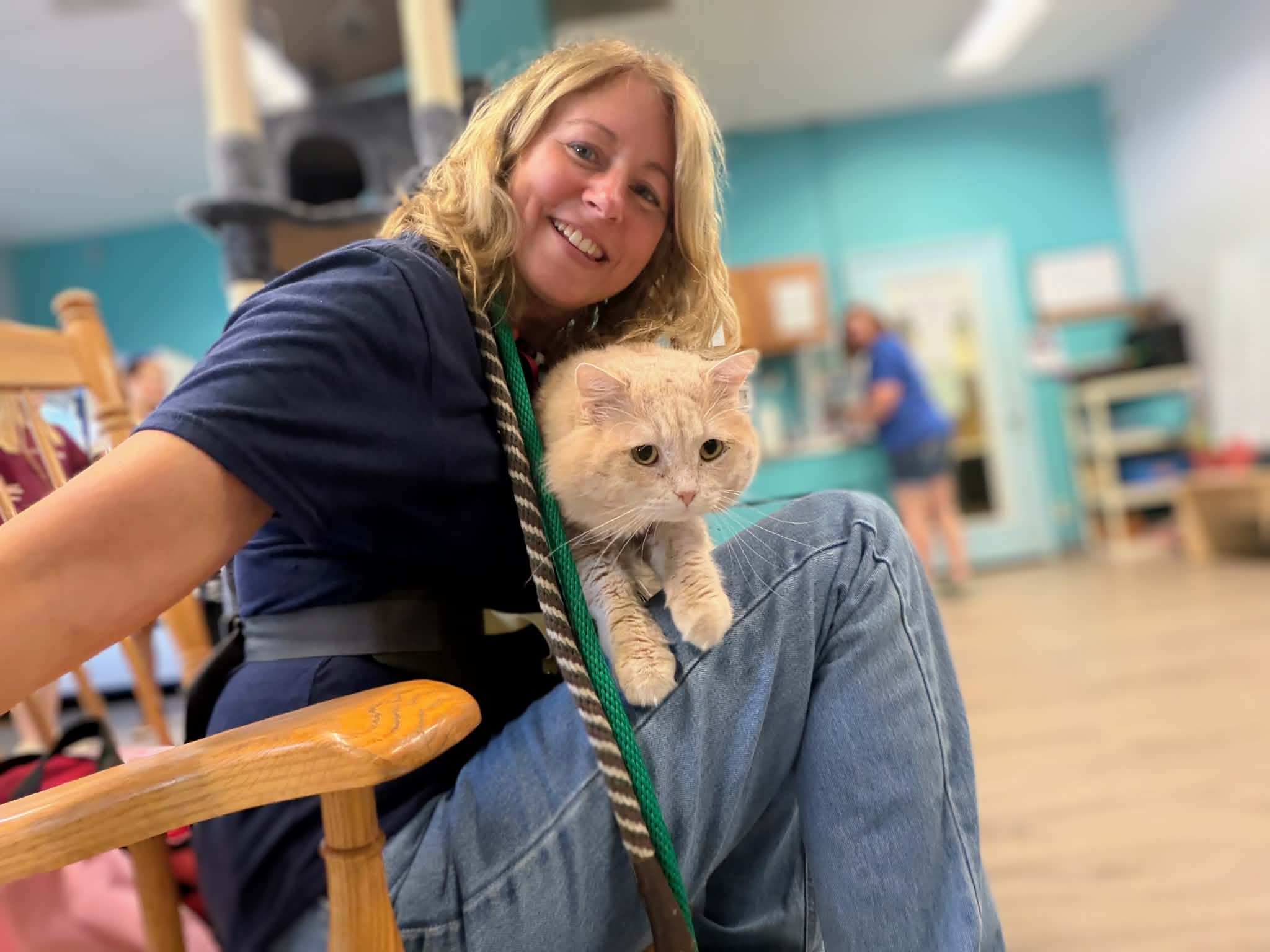
Reflections on CARE STL’s Cat Craft Day
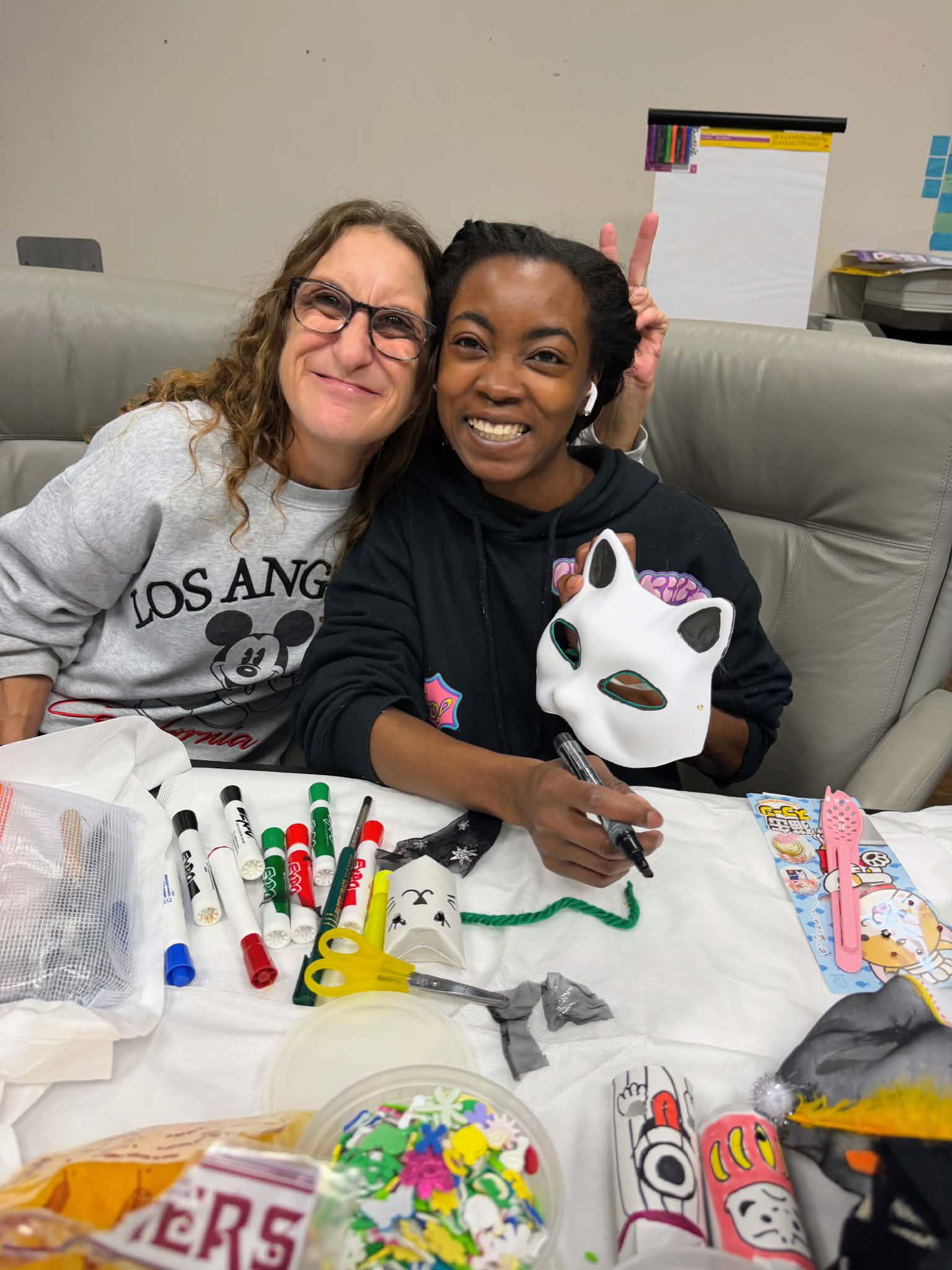
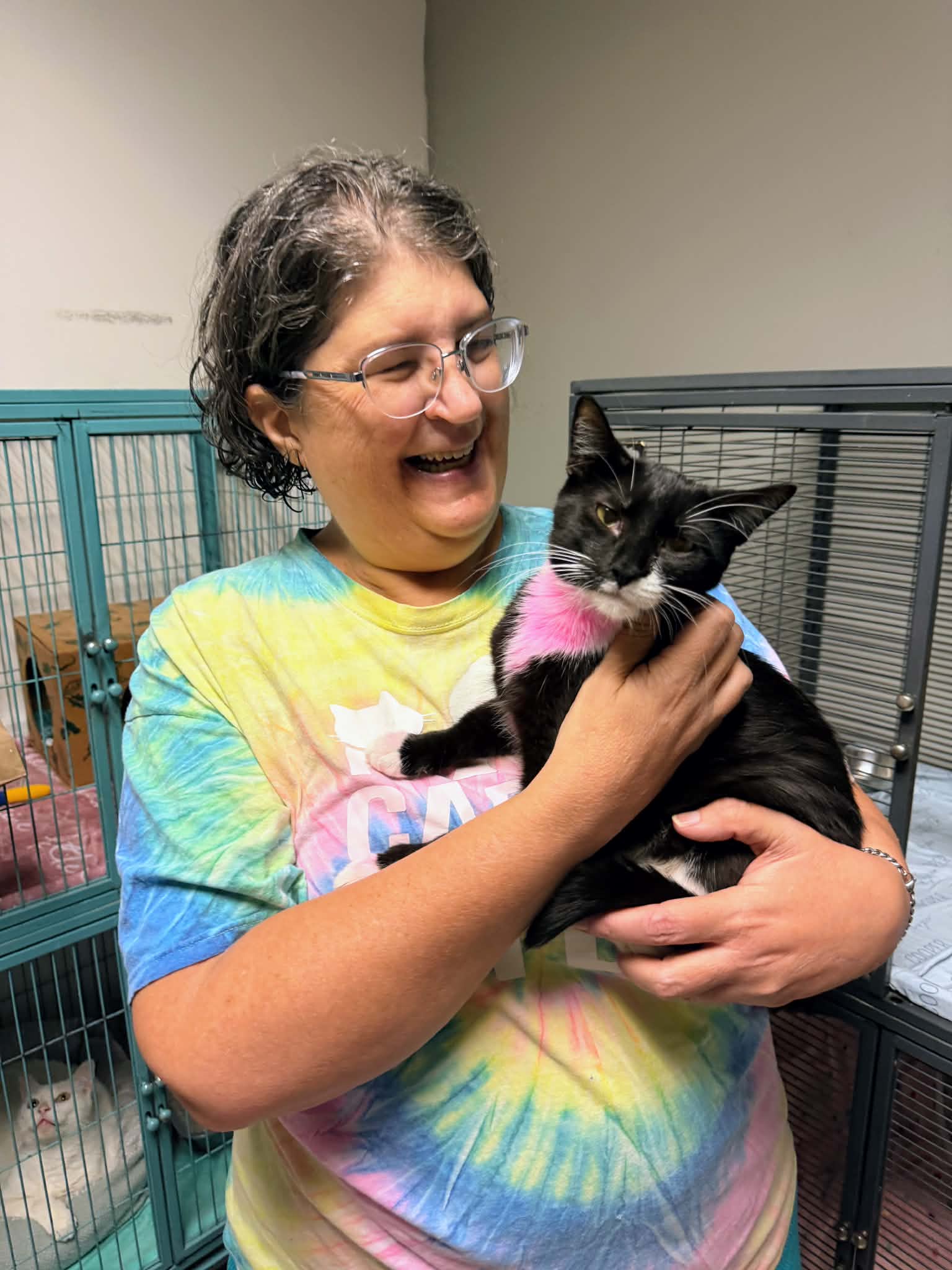
Last weekend, the Japanese Institute of St. Louis (JIOSTL) participated in CARE STL’s Cat Craft Day as a collaborating organization.
I have been involved with CARE STL for many years as a volunteer and cat foster. Last year, I participated in CARE STL’s Ship & Shop. I had also volunteered at Cat Craft Day before, so this was not my first time attending the event. This time, I was glad to take part as a partner representing JIOSTL.
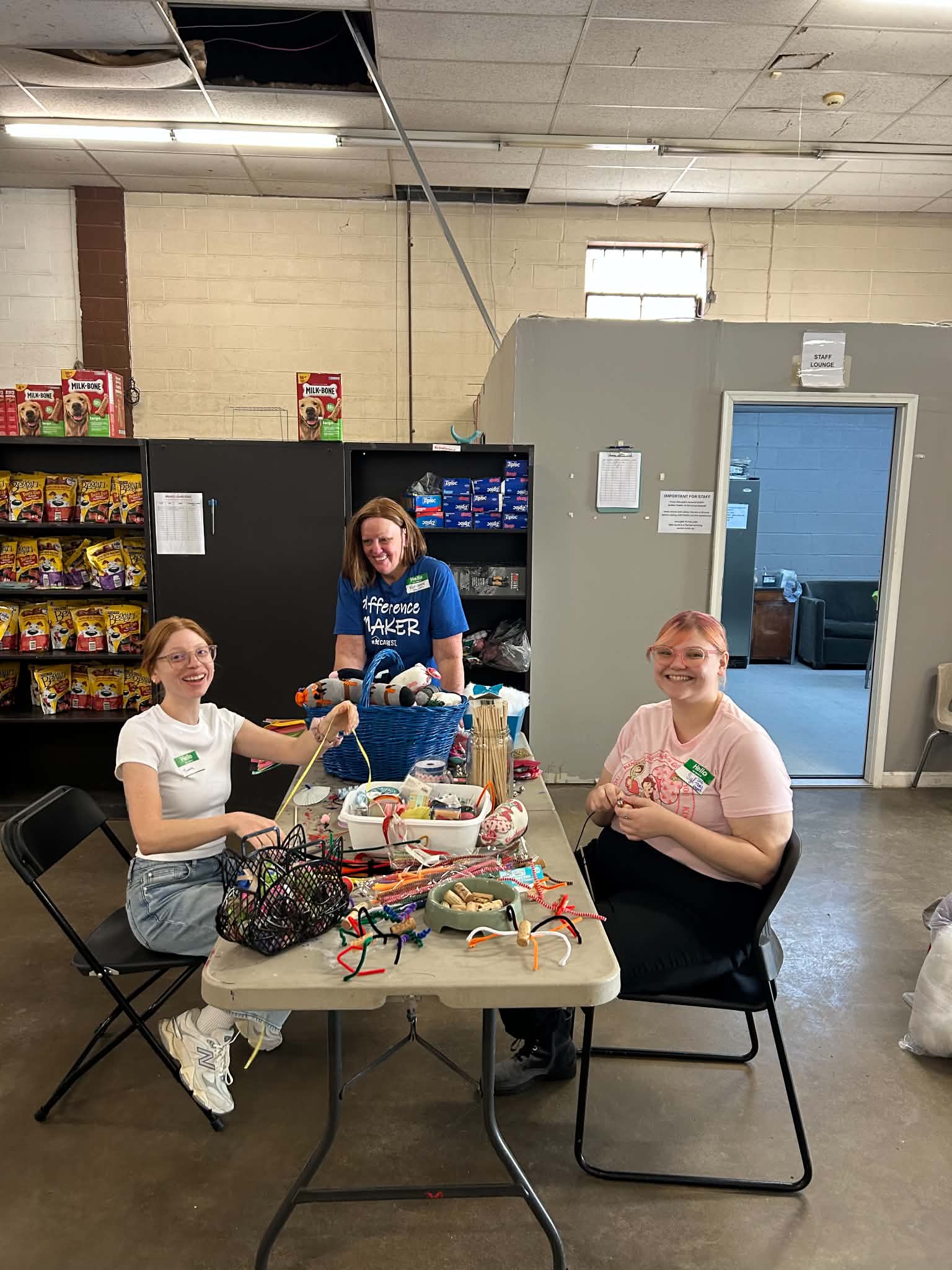
Cat Craft Day is a longstanding tradition organized by CARE STL’s cat team. Participants bring tools and materials together to make toys for the shelter cats. Some materials may be new, but many of the projects make creative use of things that might otherwise go unused or be thrown away.
We made toys from toilet paper tubes, pieces of old fleece, leftover yarn, ribbon from gift wrapping, Christmas wrapping paper, and tissue paper. We also filled socks with stuffing and catnip, made fleece snuffle toys, and created little playful figures from wine corks and pipe cleaners. The finished toys were delivered to the shelter cats, who had a wonderful time enjoying them.
I grew up in Japan with an appreciation for mottainai—the idea that useful things should not be wasted. I was moved by the way this event turns leftover materials into something joyful for the cats. It is a thoughtful way to care for animals while also making good use of what we already have.
If you have clean, reusable craft materials at home, please consider collecting them and asking a local rescue organization whether they can use them. Things like toilet paper tubes, fleece scraps, spare yarn, gift-wrap ribbons, Christmas wrapping paper, and tissue paper may be useful for future craft projects.
Matcha Sponsored by Higashisonogi Town, Nagasaki
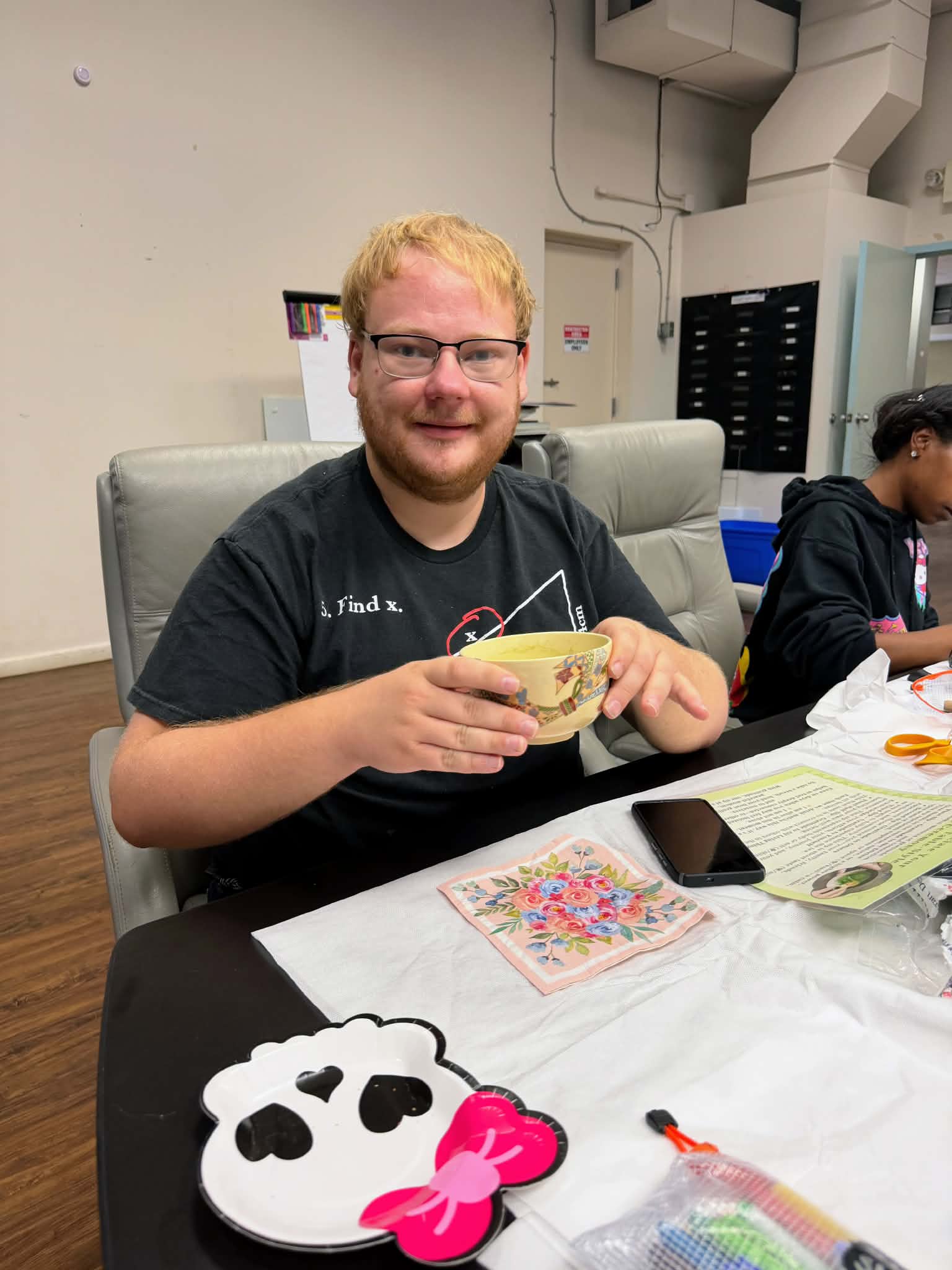
The matcha for our event was generously provided by Higashisonogi Town in Nagasaki Prefecture, our sponsor. I am sincerely grateful for this support.
Higashisonogi Town, located near the center of Nagasaki Prefecture, is a well-known tea-growing area. The town’s signature Sonogi tea is steamed tamaryokucha, recognized for its curled leaves, which resemble magatama beads. It has received awards at national tea competitions and the Japan Tea Awards. Local tea growers are also developing Sonogi matcha, bringing new possibilities to this historic tea-producing region.
It was a pleasure to share matcha from Nagasaki while introducing Japanese tea through JIOSTL. I am grateful to Higashisonogi Town for supporting the gathering and making this tea experience possible.
A Relaxed Halloween-Inspired Tea Table
The event took place indoors in a conference room, which made for a comfortable gathering. I gave the tea table a subtle Halloween feel, using the cobweb-patterned tablecloth from Harajuku Hall and napkins on Harajuku-inspired plates featuring skeletons. The setting was casual and playful, showing that Japanese tea can be enjoyed at an American-style table, too.
I belong to Tsubaki no Kai and study and teach table-style tea ceremony. For me, tea is not something that has to mean sitting in seiza on tatami for a long time, enduring aching legs as if the experience were a test of perseverance. I value the traditional practice, but I also believe tea can be welcoming, comfortable, and part of everyday life.
I enjoy sitting at a table, coordinating seasonal items, and taking time to reflect—on the day that has passed, on the week behind me, or on what is happening in my life. The tea itself, the setting, and the quiet act of looking inward can be enjoyed together. I believe that making tea approachable and enjoyable is part of what allows the practice to continue in our lives.
As a Shingon Buddhist monk, I also value the meditative quality of preparing and sharing tea. Paying attention to the movement of the whisk, the warmth of the bowl, and the person receiving the tea can bring us back to the present moment. JIOSTL’s table-style tea workshops offer guests a chance to enjoy matcha while seated in a chair and take a quiet moment for reflection.
The event was held indoors during the day, so of course we could not admire the autumn moon there! But I hope you might enjoy a moon-viewing tea gathering at home. You could prepare your favorite tea, look up at the autumn sky, and share a quiet moment with family or friends, perhaps with seasonal wagashi or another favorite sweet.
Over tea, I also had a memorable conversation with the shelter volunteers about gratitude.
Imagining What Others May Be Going Through
When I encounter aggressive driving, I sometimes feel myself getting frustrated and wonder why someone is driving that way. In those moments, I try to imagine what might be happening in that person’s life.
Perhaps they are hurrying to be with a mother who may be near the end of her life. Perhaps their spouse is about to give birth, and they are trying to get to the hospital.
Of course, I do not know what is actually happening. I use these possibilities not as facts, but as a reminder to myself not to judge someone too quickly. Imagining that there may be a reason helps me stay calm and make room for the other driver. Otherwise, I can become frustrated, too.
Sometimes I wonder whether aggressive driving can come from an assumption that one’s own time is more valuable than someone else’s: “I am driving, so you should get out of my way.” That is my own observation and speculation. We cannot know another person’s circumstances just by looking at them on the road.
I see a similar tendency in organizations. We all want our opinions to be heard. At times, we may act as though our own opinions are more correct or more important than those of others. I recognize that tendency in myself, too. This is something I try to remind myself of, rather than a lesson I am offering only to others.
There are things about another person’s circumstances that we may not understand unless we try to see the situation from their perspective. This is especially true in rescue work. Looking only at what is happening now does not tell us everything a person or an animal has experienced along the way. I hope to keep learning about those circumstances, avoid being judgmental, and live with as much kindness as I can.
My Buddhist Path and Japanese Cultural Life
JIOSTL is a Japanese cultural organization, not a religious organization. I serve as its president and introduce Japanese culture through activities such as tea, crafts, and cultural exchange. I am personally a Buddhist, but my faith is my own; it does not make JIOSTL a religious institution.
I was not born into a temple family. As an adult, through my own experiences, I came to feel that Buddhist teachings fit my moral understanding and the way I wanted to live. Some people may think a person cannot be a Buddhist monk without practicing waterfall asceticism, spending years in India, or undertaking mountain training at a Japanese temple. I have received monastic registration through a Shingon Buddhist temple in Japan. I do not mention this to boast about a title or prove my credentials. What matters most to me is living each day with care and not losing sight of kindness toward others.
Religious life in Japan is often expressed through customs and family traditions as much as through formal declarations of belief. Shinto and Buddhism have also interacted in Japan over many centuries. A common way of describing Japanese life-cycle customs is that Shinto practices are often associated with birth and other life milestones, while Buddhist rites are often associated with funerals and remembrance of the dead. This is a broad cultural pattern, not a rule followed by every person or family. Research shows that participation in customs such as hatsumōde, the first shrine visit of the New Year, does not always correspond to a person’s formal religious identity.
I am a Buddhist, and when I return to Japan, I visit Shinto shrines. My family and I go to a shrine for hatsumōde, too. These visits are meaningful cultural and family traditions for me. I do not experience visiting a shrine as a contradiction of being Buddhist. It is one of the ways I take part in customs that have shaped my family and my sense of Japanese identity.
Buddhist ethics recognizes animals as beings capable of suffering and treats them as appropriate recipients of compassion and lovingkindness. Avoiding unnecessary suffering and refraining from harming or killing animals are important Buddhist ethical ideas. At the same time, Buddhist traditions and practices are diverse. I understand animal rescue, personally, as one way to put the spirit of non-harming and compassion into practice in contemporary life.
Japanese Buddhism also has a history of hōjō-e, a life-release ceremony in which living creatures such as captured fish or birds were set free. The practice has been connected with the Buddhist principle of not taking life and with compassion for living beings. Historical rituals are not identical to modern animal-protection work, but they offer one point of reference for thinking about how to care for life in our own time.
Religious Organizations and Animal Rescue: The Possibility of Collaboration
I see great potential in collaboration between religious organizations and animal-rescue groups. Religious teachings and customs differ, and the principle of non-killing does not appear in the same form in every religion. Still, I believe that compassion for animals, care for vulnerable lives, and a desire to reduce suffering are values shared across religions.
I hope organizations from different faith traditions will consider working with rescue groups around these ethical values. People can enjoy one another’s cultures and crafts, talk about protecting animals and reducing unnecessary suffering, and share gratitude and kindness. If community members and rescue organizations work together, I believe it can create a warm and meaningful connection for us and for the animals.
I also believe that, beyond religious affiliation, people can share a basic sense of human decency and concern for one another. We may not agree on every belief or practice, but we can still recognize ethical values that bring us together. Couldn’t we create spaces where people enjoy culture and crafts while working together to protect animals? I believe we can.
One day, I hope to create a place where people can gather across generations and differences in culture and belief, reflect on compassion, and turn that compassion into practical support—not only for animals, but also for people who are struggling or in vulnerable situations. I hope it could also become a place where children can learn through meaningful cultural experiences and develop care for others.
My dream is not to turn a religious facility into an animal shelter. I imagine a welcoming community space where people can share culture, think about compassion, and connect those values with practical care for animals, people in need, and the next generation.
I hope that, through caring for children and animals, people of all ages—including three generations of families—might come together, and people, religions, and cultures might meet and cooperate. That hope is one of the reasons I continue this work.
Making toys for the cats, preparing tea, and talking about gratitude made this a memorable day. It brought together the importance of imagining what another person may be going through and my wish to meet both people and animals with as much kindness as possible.
In my next blog, I hope to explore the history of cats in Japan and share some of the many ways people in Japan and cats have shaped one another’s lives over time.
JIOSTL offers in-person table-style tea ceremony trial lessons for $15 per person. If you are interested, please contact us through our website or social media.
Chiren
President, Japanese Institute of St. Louis
http://jiostl.org/
https://www.instagram.com/jiostl
@JIOSTL
https://www.facebook.com/JIOSTL
References:
- 東彼杵町公式「そのぎ茶とは」
https://www.town.higashisonogi.lg.jp/sangyo/sonogicha/3531.html - FORTHEES「そのぎ抹茶」
https://sonogitea.com/ - JIOSTL「Table-style Tea Ceremony Workshop」
https://jiostl.org/activity - 日本の宗教的アイデンティティと儀礼参加に関する2024年全国調査
https://onlinelibrary.wiley.com/doi/full/10.1111/jssr.70065 - 同志社大学による調査紹介
https://www.doshisha.ac.jp/en/news/detail/001-t20WUt.html - Pew Research Center「Religion as a way of life in East Asia and Vietnam」
https://www.pewresearch.org/religion/2024/06/17/religion-as-a-way-of-life/ - 國學院大學「Combinatory Kami(神仏習合)」
https://d-museum.kokugakuin.ac.jp/eos/detail/?id=9715 - Stanford Encyclopedia of Philosophy「Ethics in Indian Buddhism」
https://plato.stanford.edu/entries/ethics-indian-buddhism/ - Nichiren Buddhism Library「Life-liberating practice」
https://www.nichirenlibrary.org/en/dic/Content/L/32