

2025.09.09
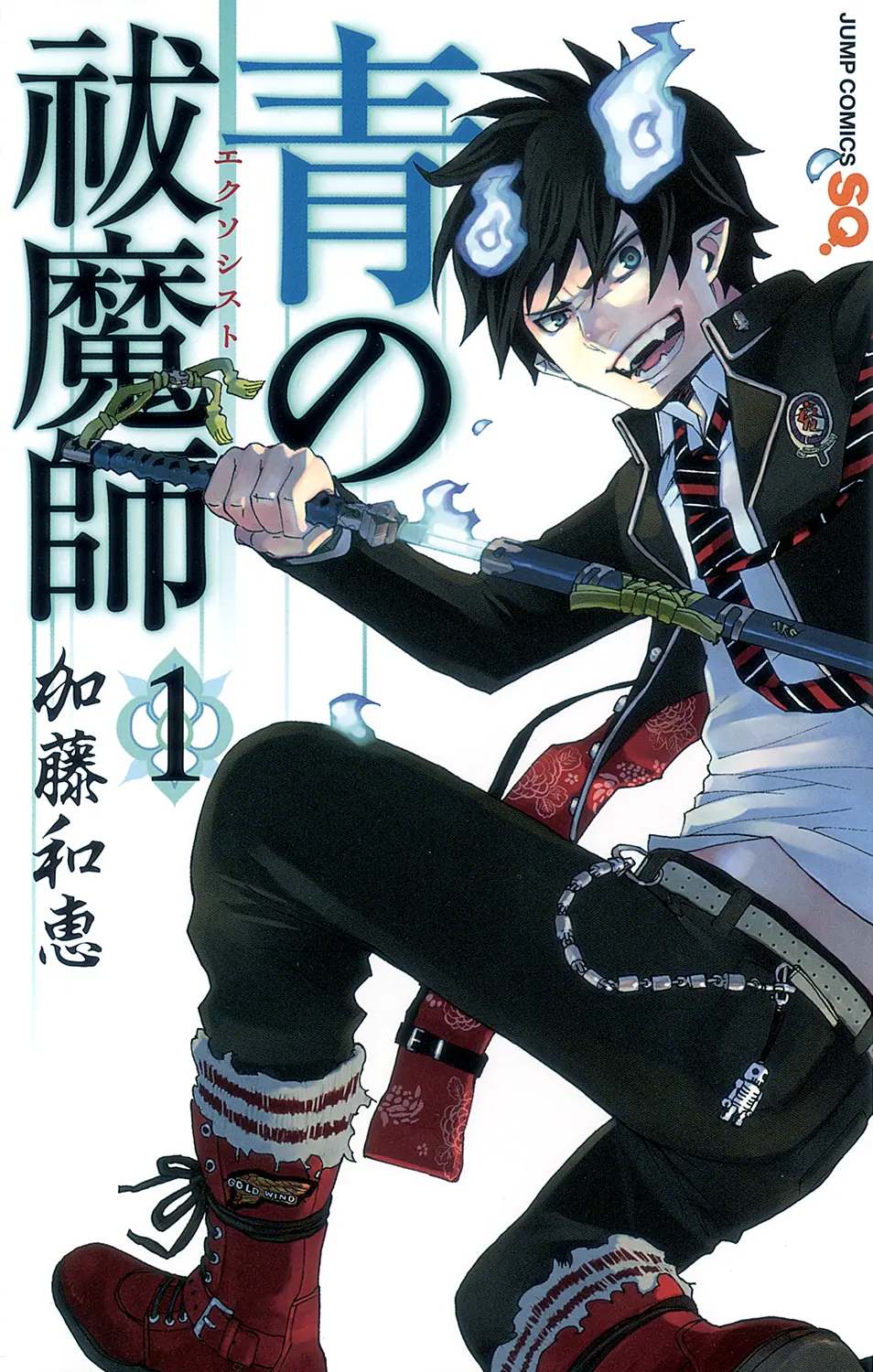
On a previous day, I wrote about Catholic exorcists. Today, I would like to introduce a Japanese anime with exorcism themes: Blue Exorcist (Ao no Futsumashi, or Exorcist). In my earlier post on The Summer Hikaru Died, I also touched on the Japanese concepts of purification (harai) and defilement (kegare). Blue Exorcist, too, portrays a world where humans and demons intersect, where good and evil cannot be neatly divided—something that, in a sense, evokes the same kind of worldview found in Demon Slayer: Kimetsu no Yaiba. The original manga was created by Kazue Kato, a female manga artist active in the world of shōnen manga.
Anime Commentary
To avoid spoilers, here I will only describe some of the setup. The protagonists, Rin and Yukio Okumura, are twins who waver between “the blood of Satan” and “the ethics of humanity.” As children, they were entrusted to a church and raised by their foster father, Father Shiro Fujimoto, so the details of their origins remain largely unknown. The True Cross Order, to which they and their companions belong, is engaged not only in simple “demon (Satan) hunting,” but also in rituals that, while fictional, draw on imagery of Buddhist temples, chanting, and mantras—elements that are both Shinto and Buddhist in nature. Unlike Western stories that are usually based on a single religious framework, this already feels distinctly Japanese.
In Shinto, kegare (defilement) is different from tsumi (sin). Natural phenomena involving blood—such as death, illness, menstruation, and childbirth—are regarded as kegare. This does not mean “unclean” in a hygienic sense, but rather a state in which one’s ki (life energy) has withered (kigare), causing a temporary decline in vitality. Through purification (harai) or ablution (misogi), this condition can be reversed. This concept is very different in texture from the Christian framework of “sin and atonement.” It is for this reason that the series’ “exorcism” is often described using the vocabulary of Shinto purification.
Syncretism × Superpowers

In the Kyoto Impure King Arc, the religious cityscape of Kyoto and the traditions of its Buddhist temples provide the backdrop for the “Impure King,” a massive calamity that serves as a metaphor for kegare. The main heroine, Shiemi Moriyama, possesses the powerful ability of a “Tamer,” summoning plants in ways that can be seen as drawing from Japan’s animistic tradition of revering the spirits that inhabit all things.
In the Shimane Illuminati Arc, Izumo Kamiki’s family lineage as shrine maidens (miko) is revealed, as well as her white fox familiars, Miketsu and Uke. These clearly point to Inari worship, where foxes serve as divine messengers (kenzoku) of the Inari deity, associated with fertility, abundant harvests, and prosperity.
The Legend of the Fox
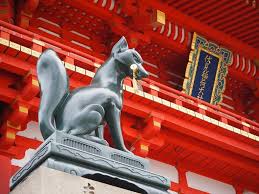
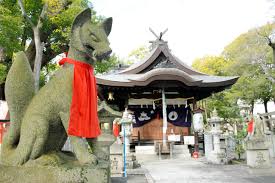

The fox is a dual-natured figure in Japanese mythology and folklore. The nine-tailed fox originated in Chinese mythology as a legendary creature with nine tails, symbolizing wisdom and magical power. At times, it is revered as an auspicious beast; at others, feared as a malevolent figure who takes the form of a beautiful woman to deceive people.
The most famous tale is that of Tamamo-no-Mae. The nine-tailed fox, disguised as a woman, attempted to seduce and destroy Emperor Toba, but was exposed by onmyōji (yin-yang masters) and slain. Afterwards, her body transformed into the Sesshōseki (“Killing Stone”), which was said to emit poisonous vapors that killed many living beings. Today, the Sesshōseki area in Nasu, Tochigi Prefecture, is a popular tourist site, though entry is sometimes restricted when toxic gas levels rise. In March 2022, it was reported that the Sesshōseki had cracked in two.
In Blue Exorcist, the motif of “white fox familiars” draws on the tradition of Inari worship and the lineage of food deities such as Miketsu-no-Kami and Uke-mochi. Rather than malevolent fox spirits (yako), they are portrayed as benevolent foxes (zenko).
From Kyoto to Shimane
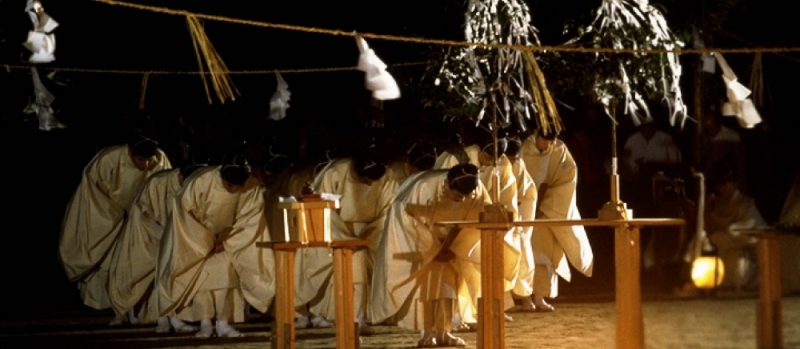
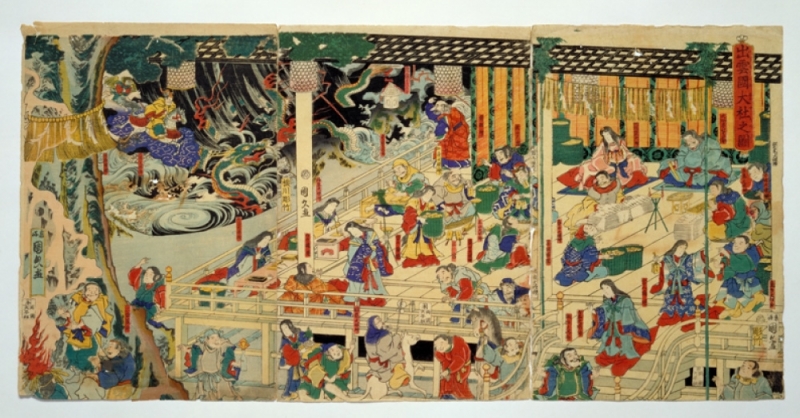
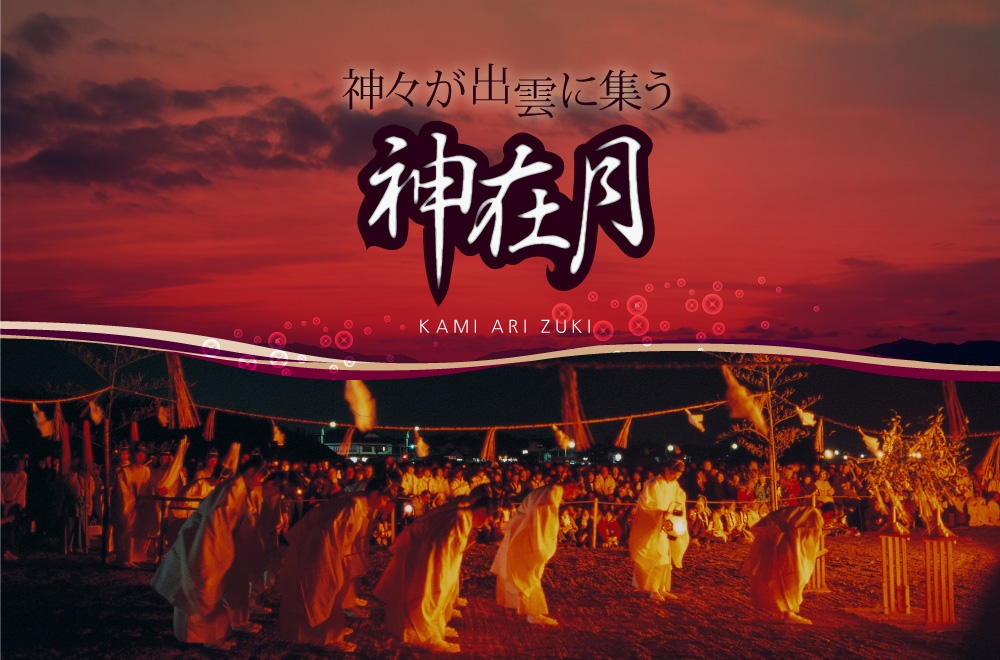
The anime moves from the Kyoto Impure King Arc into the Shimane Illuminati Arc, and then on to the Snow Arc (October 2024) and the Shuya Arc (January 2025), with the story accelerating further. Shimane, of course, is home to Izumo Taisha, where all the gods of Japan are said to gather in the tenth month of the lunar calendar for the divine council known as Kamuhakari.
In Shimane, this month is called Kamiarizuki (“the month with gods”), while in the rest of Japan it is known as Kannazuki (“the month without gods”), because the gods are believed to be “away” in Izumo. According to ancient tradition, the gods would write the names of men and women on wooden tablets, pair them together, and thus preside over matchmaking. To think of divine matchmaking in this way is truly fascinating. Even today, Izumo Taisha holds the Kami-mukae-sai (welcoming the gods), the Kami-ari-sai (celebrating their presence), and the Kami-okuri-sai (sending them off), all important festivals in local society.
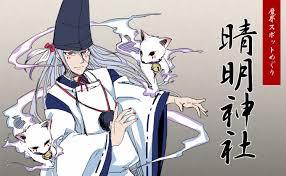
Kyoto, on the other hand, is home to Seimei Shrine, dedicated to Abe no Seimei, the legendary onmyōji, as well as the famous Fushimi Inari Taisha with its countless torii gates. If anime inspires someone to visit Japan, their trip will surely be all the more rewarding. Being from Kansai myself, I would be happy to recommend places to visit, especially in Kyoto and Osaka.
Blue Exorcist Exhibition at the Museum of Kyoto
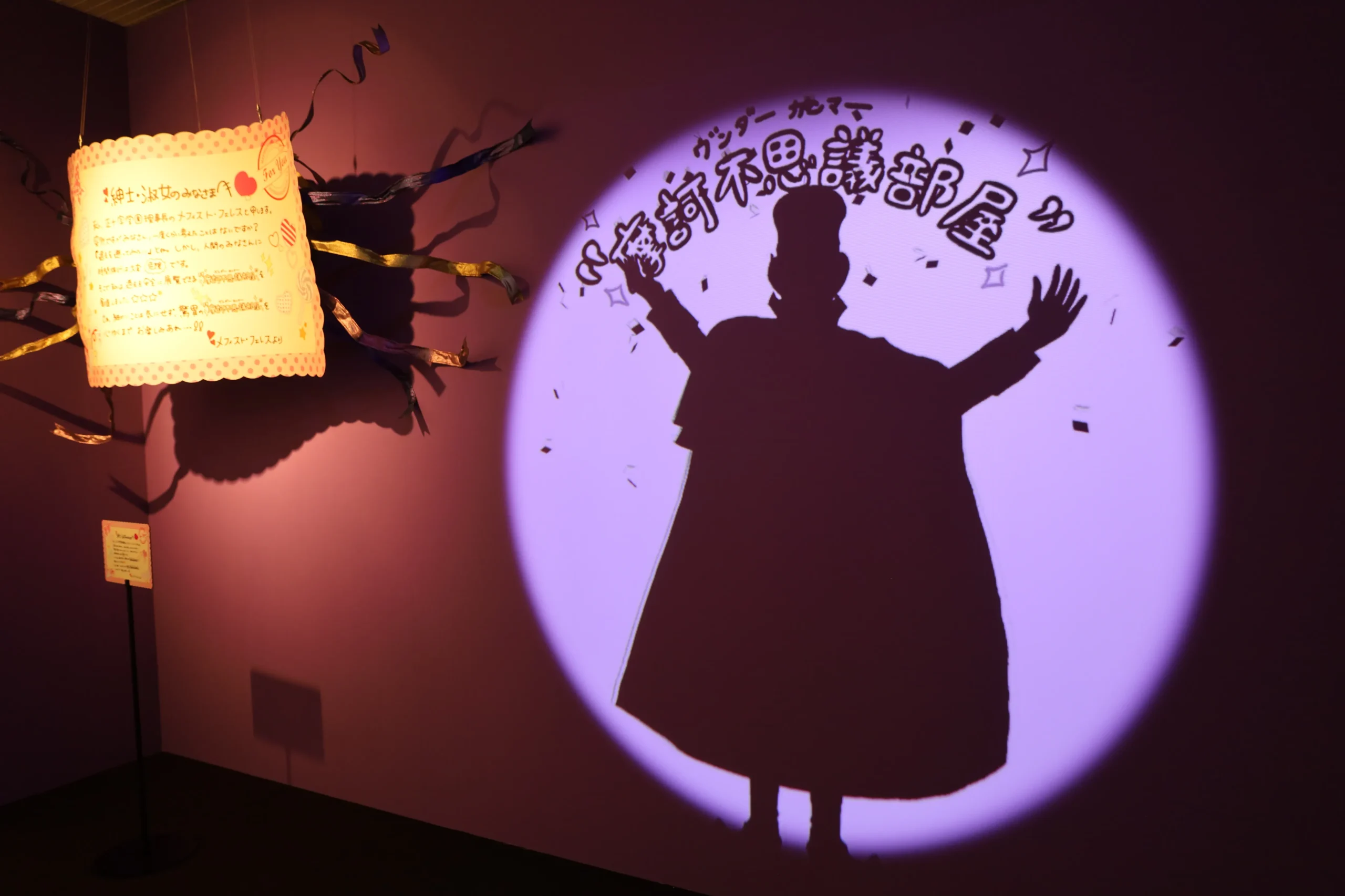
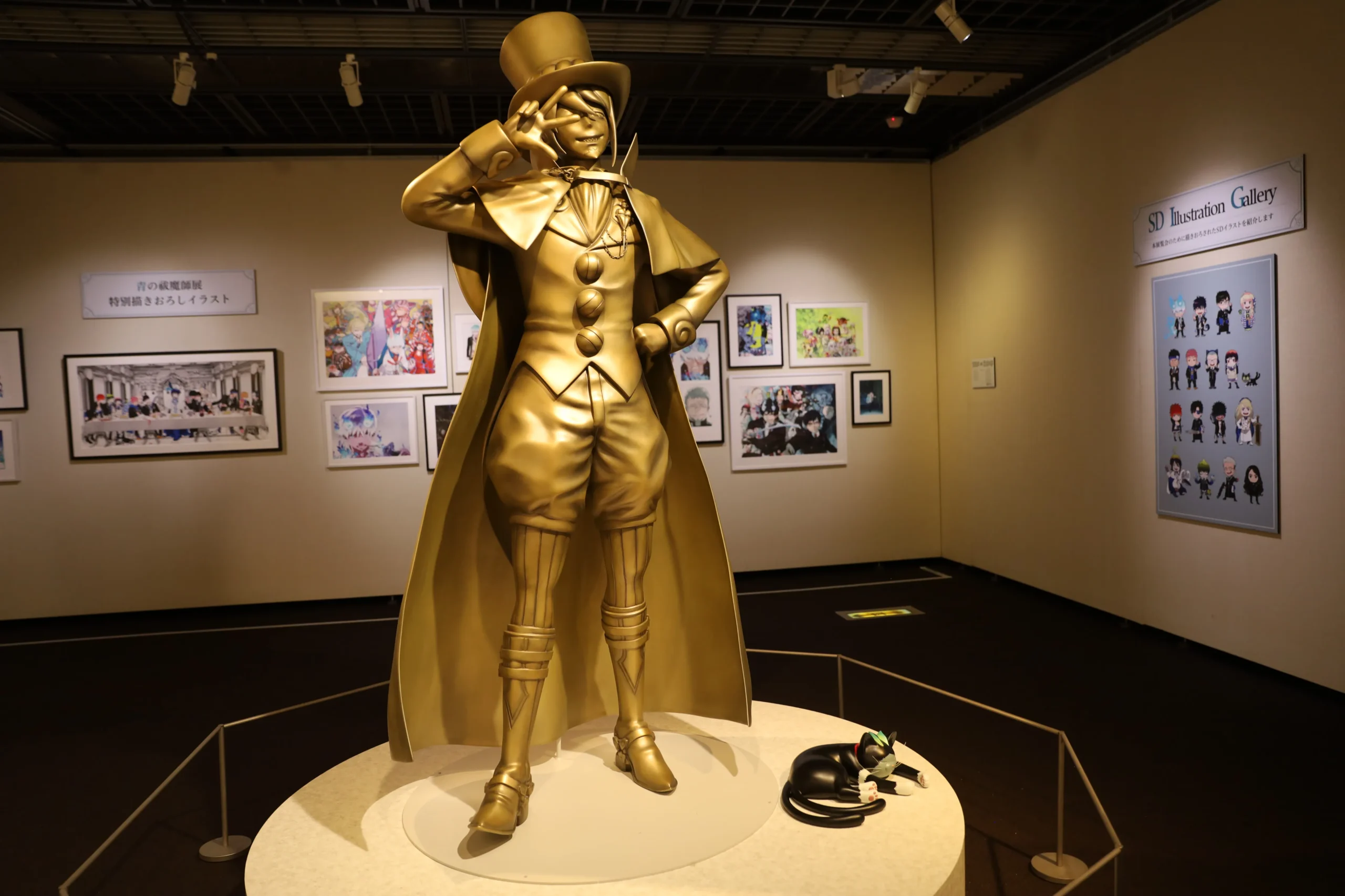


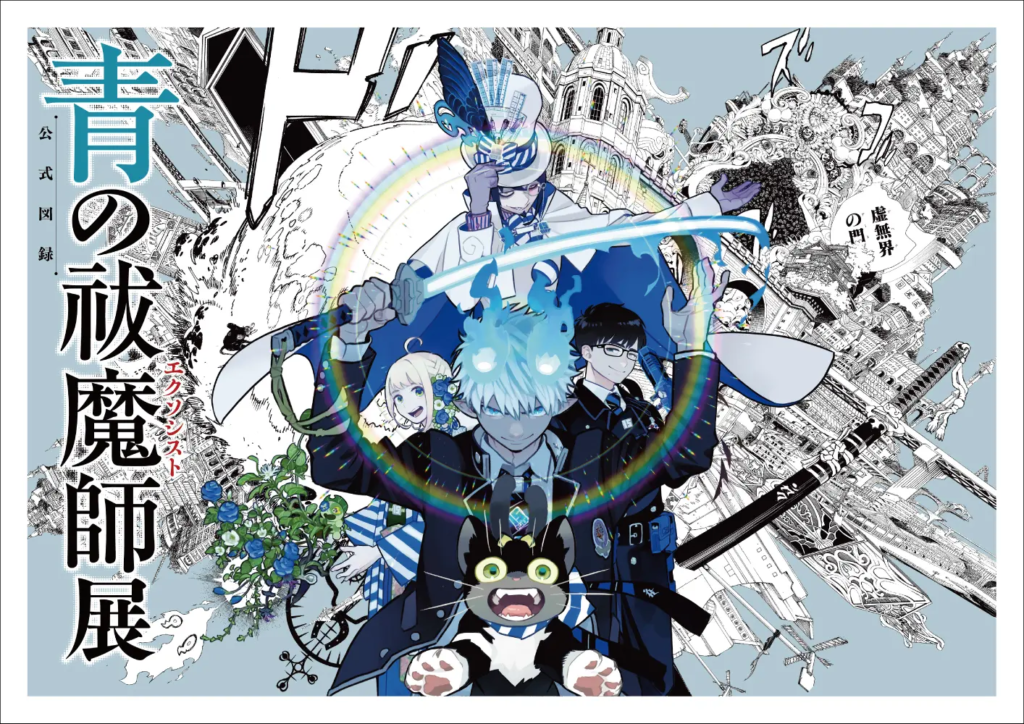
I also visited the Blue Exorcist Exhibition at the Museum of Kyoto. This exhibition celebrated the 15th anniversary of the manga and toured Tokyo (Matsuya Ginza), Nagoya (Nagoya Parco), and Kyoto. Compared to the Demon Slayer exhibition, it had fewer displays and was not interactive, but it was no less impressive. Many of Kazue Kato’s original manuscripts were exhibited, and the intricacy of her linework was truly overwhelming. For those who create manga or anime themselves, the exhibition would offer even deeper insights.
The chronological panels made it easy to trace Rin and his companions’ journey once again. What struck me most was the inclusion of numerous episodes and illustrations not yet adapted into anime. The exhibition also featured attractive limited-edition goods, my personal favorite being the life-sized golden Mephisto and Kuro statues. Best of all, visitors had the chance to view a 90-minute Blue Exorcist film. The art style differed from the anime series, with a brilliance and festive atmosphere that felt less Japanese and more like traveling to a Southeast Asian festival—a fascinating, dreamlike experience.
In Closing

The Japanese Institute of St. Louis (JIOSTL) will host a booth at the Anime Festival on September 28. While our organization usually focuses on traditional Japanese culture, this time we are participating in an anime-centered event.
At our booth, we will be offering merchandise such as Tanjiro’s sword replicas and handkerchiefs from Demon Slayer, origami, Pokémon bags, and Sanrio goods. In addition, flyers and posters for Demon Slayer and Blue Exorcist will be available for free to those who follow or like our Instagram or Facebook pages (this includes those who already follow us). Supplies are limited, so please be sure to stop by early!
Chiren
President, Japanese Institute of St. Louis
http://jiostl.org/
https://www.instagram.com/jiostl
@JIOSTL
https://www.facebook.com/JIOSTL
#japaneseinstituteofstl #japaneseinstituteofstlouis #JIOSTL #jiostl #japaneseinstitute #kimonoclubstl #kimonoclub #STL #japaneseSTL #japanesestl #monk #shingon #meditation #doula #teastl #matchastl #matcha #teaceremony #workshop #hospice #japaneseworkshop #buddhism #buddhismstl #buddhist #kidsworkshop
#BlueExorcist #AoNoExorcist #KyotoSaga #ShimaneSaga #SnowSaga #ShuyaSaga #Izumo #Kamiarizuki #Kannazuki #InariWorship #FoxSpirits #NineTails #Onmyoji #Miko #Purification #Kegare #Shinto #JapaneseMythology #AnimeAnalysis