
September 8, 2025
Synopsis
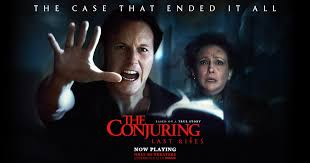


This past weekend, I went to see The Conjuring: Last Rites. I have long been an admirer of director James Wan’s films and have seen all of them, so I went without hesitation to watch this final chapter of the Conjuring series. Ed and Lorraine Warren were real figures, and it is often said that the cases depicted in the films are based on their actual experiences. Yet opinions differ widely regarding the authenticity of these accounts.
To share something more personal—on my mother’s side in Shikoku, my family descends from a line believed to have the ability to “see.” For that reason, I often feel that Insidious reflects such real-life experiences more faithfully than The Conjuring. With this in mind, I would like to reflect on Japanese and American horror through the lens of a new anime.
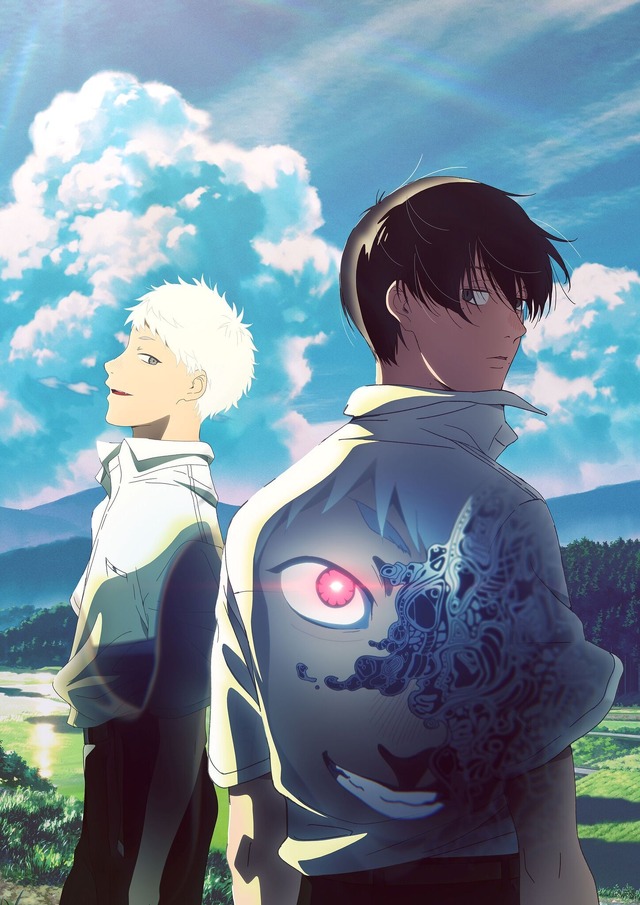
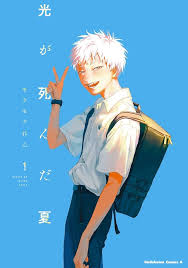
Day 4 features The Summer Hikaru Died. Though it falls into the emerging genre of “coming-of-age horror” set in a rural mountain village, it compels viewers to ask: “Is this simply a bromance of deep friendship, or does it also contain BL (Boys’ Love) elements?” Childhood friends Yoshiki and Hikaru anchor the story. Hikaru vanishes for a week in the mountains, and when he returns, he is no longer truly Hikaru, but “something else.”
Yet despite recognizing this uncanny reality, Yoshiki does not respond only with fear or revulsion. Instead, he clings to the presence with a disturbing, abnormal attachment. What, then, is the nature of his emotion? And who—or what—is “Hikaru”? It is the portrayal of this tangled complexity that lifts the work beyond the scope of “ordinary horror.”
The Cultural Roots of Japanese Horror


At the heart of Japanese horror lies the cosmology of Yaoyorozu no Kami—the “eight million gods.” Mountains, rivers, forests, and even ordinary objects (toilets among them) are believed to be inhabited by deities and spirits. Nature itself is imbued with awe and reverence. Thus, Japanese horror often emerges not from external monsters but from defilement—violating unseen sacred forces, provoking curses, hauntings, or disruptions of the natural and communal order.
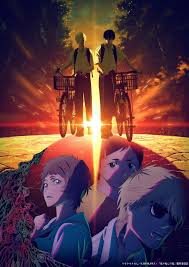
The setting of The Summer Hikaru Died is a remote mountain village, the kind of place where people might still declare that “being gay is a sickness.” In such an insular society, the spread of kegare (ritual impurity) becomes palpable, and the shadow of a local folk deity, Nounuki-sama, looms. Released in the summer of 2025, the anime has been praised for its exquisite background art and for its restrained yet chilling expressions of fear.
The premise asks a haunting question: What if your beloved returned one day, but was no longer the same? In this sense, the work may recall Stephen King’s Pet Sematary. Yet the true terror here is not loud noises or shocking visuals, but the quiet distortion of the everyday—fear seeping in like a stain. In that way, it offers a wholly distinct genre of horror.
American Horror in Contrast — The Conjuring Experience

American horror, by contrast, is firmly rooted in Christian theology. In films such as The Exorcist, Poltergeist, and The Omen, the priest’s ritual becomes central: holy water, crucifixes, and the Bible wield divine authority. Evil manifests as “the Devil” or “the Antichrist,” and resolution is reached through ritual exorcism.
When I saw The Conjuring: Last Rites in the theater, the audience screamed and recoiled whenever a ghost appeared. The jump scares worked—but the ghosts themselves seemed less frightening, sometimes even unintentionally humorous (forgive my irreverence). It reminded me of a memory from my study abroad days in Texas, when I first saw Ju-On (The Grudge) in an American theater with my host family.
In that film, the sight of a white-painted boy sitting silently in a dark Japanese-style house terrified me to my core. Yet the American audience laughed. Later, they told me the boy looked absurd rather than frightening. For me, however, the painted white face evoked death, and seeing a boy of five or six—an age of natural mischief and vitality—sitting motionless, expressionless, in the dark was deeply unsettling. More horrifying still was the despair of being cursed within one’s own home, the very place meant to offer safety.
What one culture reveres as sacred, another does not. What one interprets as terror, another may dismiss. The cultural axis itself defines the experience. As with the demons in Demon Slayer, spirits in Japanese horror are not absolute adversaries like devils. They are born of lingering resentments and regrets. That is why Japanese horror cultivates “psychological dread” rather than relying solely on spectacle.
Ending Theme: Anata wa Kaibutsu
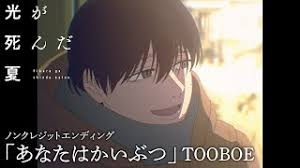
Anime theme songs are often an integral joy of the viewing experience. The ending theme of The Summer Hikaru Died is TOOBOE’s “Anata wa Kaibutsu” (You Are a Monster). The composer has said that the more he sought to understand Yoshiki’s feelings, the more pure, sorrowful, and cruel they seemed—and that the song was written almost as an act of forgiveness for the characters. It distills the story’s lingering melancholy into music.
In the music video, the singer bathed in light symbolizes a liminal space where nature and faith converge in prayer. The costume incorporates motifs recalling “the body that is no longer Hikaru,” as described in the original manga. The imagery enfolds coldness and intimacy, strangeness and familiarity, into a visual forgiveness that mirrors the story’s themes.
The anime version goes further: a train sequence reflects the transformations of “Hikaru” and Yoshiki’s inner turmoil. Some viewers note that Hikaru himself literally shifts at the moment before and after the lyric “sayonara—.”
Conclusion
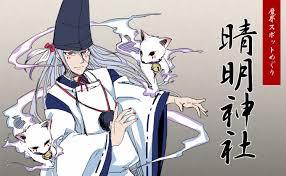
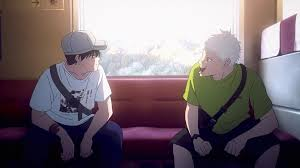
The Summer Hikaru Died is a haunting tale where friendship and love, fear and forgiveness, converge. The Japanese horror tradition of “quiet psychological corrosion” blends with BL aesthetics of delicate melancholy, giving the work singular depth.
The anime is updated weekly on Sundays, alongside the serialized manga. Its conclusion remains unknown. What we do know is this: Yoshiki and Hikaru, though bound to one another, remain tethered to their community as their place of belonging.
Terrified yet inseparable, they yield themselves to the curse of love. We can only watch, transfixed, to see where their path will lead.
Chiren
President, Japanese Institute of St. Louis
http://jiostl.org/
https://www.instagram.com/jiostl
@JIOSTL
https://www.facebook.com/JIOSTL
#japaneseinstituteofstl #japaneseinstituteofstlouis #JIOSTL #jiostl #japaneseinstitute #Anime #kimonoclub #STL #japaneseSTL #japanesestl #monk #meditation #doula #Stlouisanimefes #matcha #TheSummerHikaruDied #YouAreAMonster #TOOBOE #FriendshipAndLove #BoysLoveAnalysis #LGBTTheme #JapaneseHorror #ComingOfAgeHorror #RelationalHorror #AnimeReview #AnimeAnalysis #NetflixAnime #EightMillionGods #KegareAndPurification #PsycologicalFear #JapaneseCultureAnalysis #CulturalComparison #HorrorFilmAnalysis
(Reference Links)
- Annabelle Comes Home (Conjuring Universe, Entertainment Weekly photo)
https://ew.com/movies/2019/06/26/annabelle-comes-home-conjuring-universe - Official Conjuring Movie Website
https://www.theconjuringmovie.com - Anime! Anime! Article (July 27, 2025)
https://animeanime.jp/article/2025/07/27/91981.html - The Summer Hikaru Died – “Anata wa Kaibutsu” Music Video
https://www.youtube.com/watch?v=iKBc6dMskmw - The Summer Hikaru Died – Ending Theme Music Video
https://www.youtube.com/watch?v=_dq21OHPJTk\&list=RD_dq21OHPJTk\&start_radio=1 - The Summer Hikaru Died – Official Anime News
https://hikanatsu-anime.com/news/index00220000.html - The Summer Hikaru Died – Official Anime Website
https://hikanatsu-anime.com/ - Wikipedia (Japanese): 『光が死んだ夏』
https://ja.wikipedia.org/wiki/%E5%85%89%E3%81%8C%E6%AD%BB%E3%82%93%E3%81%A0%E5%A4%8F - Wikipedia (English): The Summer Hikaru Died
https://en.wikipedia.org/wiki/The_Summer_Hikaru_Died - Official X (formerly Twitter): The Summer Hikaru Died
https://x.com/hikanatsu_anime - KADOKAWA Special Feature Page
https://promo.kadokawa.co.jp/hikarugashinda/ - Animate Times Article
https://www.animatetimes.com/news/details.php?id=1752181839 - Anime! Anime! Feature Article (July 5, 2025)
https://animeanime.jp/article/2025/07/05/91609.html - Renote Article
https://renote.net/articles/323908 - Netflix Japan Streaming Page
https://www.netflix.com/title/81751234 - Wikipedia (Japanese): Yaoyorozu no Kami (Eight Million Gods)
https://ja.wikipedia.org/wiki/%E5%85%AB%E7%99%BE%E4%B8%87%E3%81%AE%E7%A5%9E - Britannica: Kegare (Impurity)
https://kotobank.jp/word/%E7%A5%92-45932 - Wikipedia (Japanese): Harai (Purification)
https://ja.wikipedia.org/wiki/%E7%A5%93 - Wikipedia (Japanese): Yūrei (Ghosts)
https://ja.wikipedia.org/wiki/%E5%B9%BD%E9%9C%8A - USCCB: Explanation of Exorcism
https://www.usccb.org/prayer-and-worship/sacraments-and-sacramentals/exorcism - Vatican: Code of Canon Law – Canon 1172 (Exorcism)
https://www.vatican.va/archive/cod-iuris-canonici/cic_index_en.html - The Conjuring: Last Rites Review (Entertainment Weekly)
https://ew.com/movies/the-conjuring-last-rites-review/ - The Conjuring: Last Rites Review (Associated Press)
https://apnews.com/article/the-conjuring-last-rites-review - Review in National Catholic Register
https://www.ncregister.com/cna/the-conjuring-last-rites-review - TOOBOE – Anata wa Kaibutsu (Song & MV Analysis, Music Voice)
https://www.musicvoice.jp/news/280174/ - TOOBOE Interview (Natalie Music)
https://natalie.mu/music/news/585127