
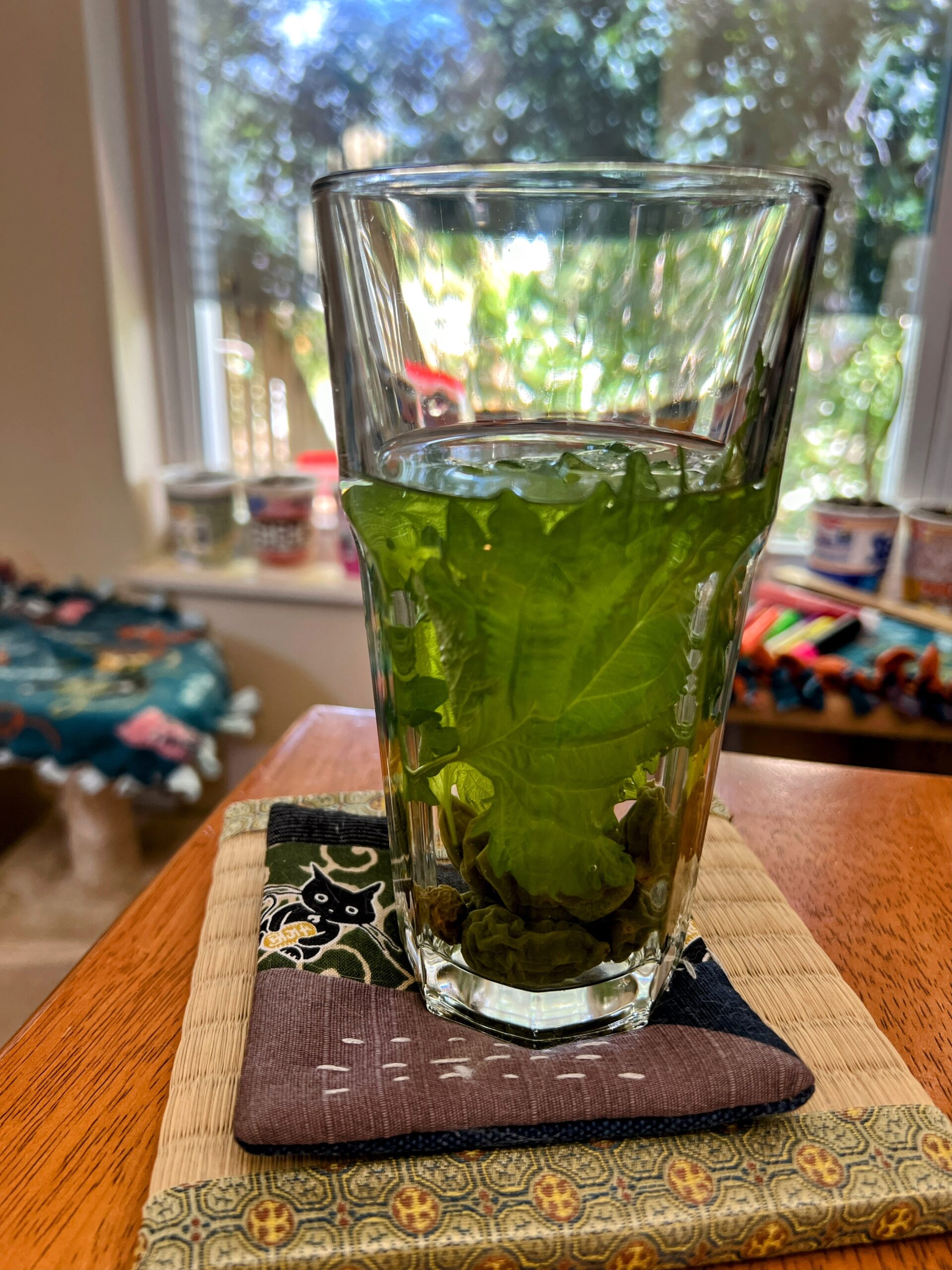
Recently, I had the chance to get my hands on green plums here in the U.S. that closely resembled the Japanese ones.
In Japan, this is the season when hydrangeas bloom beautifully, and my social media feeds are filled with vibrant photos of them. It’s also the time of year when people make homemade plum wine, plum syrup, and plum juice using fresh green plums.
Here in America—especially in the Midwest—it’s rare to find green plums. The ones I got were most likely Korean and slightly longer in shape than Japanese varieties. I was curious to know how they might differ in flavor, so I decided to give them a try.
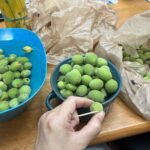
The preparation process turned out to be more time-consuming than I expected. In addition to soaking the plums to remove bitterness, I had to use a toothpick to scrape off each dark blemish one by one. Honestly, I thought I’d start seeing them in my dreams—it was that tedious!
My grandmother loved both crafting and alcohol. She used to make plum wine, fruit liqueurs, and plum syrup. She was such a strong drinker that we jokingly called her an uwabami (a Japanese word for someone who can drink like a snake). Meanwhile, the men in the family—who couldn’t hold their liquor—watched her enviously as she happily tasted and soaked the fruit.
As a child, I couldn’t understand how those sour green plums could turn into sweet juice, tart red pickled plums, or even alcoholic drinks. It all seemed like magic to me.
Since I only had a small batch of green plums this time, I made plum jam and plum syrup, and mixed some with fresh green shiso (perilla) from my garden to make shiso plum juice. To my surprise, the shiso version was delicious, and I shared it with neighbors and friends who regularly give me vegetables from their gardens.

The plum jam tasted more like a light apricot preserve than plum—refreshing and not too sour. I thought it might pair well with cream cheese, too. But before I knew it, both the jam and juice were completely gone.

At the bottom of the juice jar, the leftover wrinkly plums had a unique texture—soft on the outside and crunchy in the middle. I ended up eating them all! I had originally planned to turn them into another batch of jam, but the texture was so fun that I just couldn’t resist.
Even if you don’t eat the leftover plums, they’re great for cooking—especially in simmered fish dishes. They help eliminate any fishy smell and add subtle flavor. My grandmother used to use them in this way all the time.
I grew up in the countryside, and our home garden was full of fruit trees and vegetables. Among them, the loquat tree (biwa) held a special place in my grandfather’s heart. When I was little, I planted a loquat seed from a fruit I had eaten. That seed grew into a strong tree that bore fruit every year. My grandfather used to proudly say, “This tree grew from the seed you planted,” and would climb up a ladder just to harvest the fruit for me.
Back then, I didn’t appreciate his efforts. I remember thinking, “Why not just buy loquats at the store? This is dangerous and too much trouble.”
Now, as an adult, I understand how hard it is to grow something from a single seed. I’ve tried growing avocado plants from pits, only to have squirrels eat them or lose them to the winter cold. It’s made me deeply aware of how precious it is to nurture life from the very beginning.
So, this time, I cracked open a few of the green plums I bought and planted their seeds. Who knows? Maybe in five or ten years, I’ll have a plum tree of my own. That is—if the squirrels and rabbits in my yard haven’t already eaten them! (I wouldn’t be surprised.)

If you ever come across green plums, I highly recommend trying to make plum juice. Not only is it delicious, but it may also bring back memories—or create new ones.