
The Resonance of sounds
It has been two months since I returned from Japan, yet I still have not managed to organize my photos. Nearly three years’ worth of images sit on my phone, each filled with memories so vivid that I hesitate to sort through them.
Every time I revisit those photos, I am reminded that each image brings back not only a moment, but also the *scents* and *sounds* surrounding it.
Among all those memories, the photos of shakuhachi—along with festivals and food—are especially meaningful to me. The shakuhachi, which I have been studying for several years now, is far more than a musical instrument. To me, it is a sacred tool that centers the mind, an extension of my spiritual practice.
Every week, I speak with my teacher in Japan online, and these lessons are both enjoyable and grounding, giving me a renewed sense of focus.
What Is the Shakuhachi?
When people think of traditional Japanese instruments, many imagine the shamisen, koto, flutes, or drums.
The shakuhachi was introduced from Tang China during the Nara period as one of the instruments used in gagaku. Early shakuhachi had six finger holes and could be crafted from bamboo, stone, or even animal tusks. Some of these ancient instruments are still preserved in the Shosoin Repository.
The shakuhachi appears in *The Tale of Genji* as “the bamboo flute,” showing that it was cherished among the aristocracy. However, it gradually vanished from gagaku ensembles around the 12th century.
As with other wind instruments, longer tubes produce lower tones, while shorter ones produce higher tones. Musicians select the flute length based on the musical mode of the piece they intend to play.
Interestingly, a shakuhachi can be made from PVC pipes or any plastic tubing. I once crafted a shakuhachi from a water pipe and even performed with it.
When I gave a handmade shakuhachi to my uncle—who had mentioned wanting to start a new hobby for retirement—he looked at it with the most indescribably puzzled expression. I still vividly remember that moment (LOL).
The standard shakuhachi length is one shaku eight sun (about 54.5 cm), which is how the instrument got its name. Modern shakuhachi range from 1.6 shaku (48 cm) to 2.4 shaku (72 cm).
The shakuhachi is often used in Fuke shakuhachi , a tradition deeply connected to religious practice.
As often portrayed in period dramas, komusō monks of the Edo period played the shakuhachi instead of chanting sutras as they traveled through Japan. After the abolition of the Fuke sect in the Meiji era, the shakuhachi became popular among the general public, eventually becoming part of modern ensembles with koto and shamisen, as well as folk music.
My Encounter with the Shakuhachi
To be honest, I never imagined I would one day play the shakuhachi. As a child, I preferred percussion instruments like the xylophone. I was never particularly gifted in music and even stopped practicing piano after many years because I had only continued at my family’s urging.
My grandmother and aunt were certified koto Master and were also highly skilled in shamisen. My grandmother, aunt, and mother all studied Japanese classical dance for many years. They also played piano, flute, folk music, and nagauta—they were incredibly talented for many other Japanense classic art and music.
My father, during his life, apparently played acoustic and electric guitar, though not very well. So perhaps I inherited his musical genes instead (LOL).
I began playing the shakuhachi for a simple reason: as a child, I admired the komusō monks in historical dramas when I watched with my grandpa. On my first attempt, I happened to produce a sound, and my teacher excitedly told me, “See? You’re naturally talented!” (Because I am monk?! Lol)
But beyond that lucky first tone, the real training began. Producing *a* sound is not the same as producing a *beautiful* sound. My breath control was weak, my pitch unstable, and my tone unrefined.
The shakuhachi reflects the smallest shifts in mind and body.
When the breath wavers, the sound wavers.
When the heart feels light, the sound becomes clear.
The moment breath enters the bamboo, the mind settles, and the rising tone feels like a reflection of your inner state at that exact moment.
Breathing, in many ways, is a mirror of the heart.
Within a simple piece of bamboo—only a mouthpiece and a few holes—exist breath, stillness, and space. It is no wonder that the shakuhachi is regarded as a meditative instrument within Zen and Buddhist traditions.
Kinko-ryu, Tozan-ryu, and Meian-ryu

There are many shakuhachi schools today, but the two most prominent are Kinko-ryu and Tozan-ryu .
Kinko-ryu
Founded in the mid-Edo period by Kurosawa Kinko, who traveled throughout Japan collecting honkyoku from komusō temples.
Kinko-ryu emphasizes spirituality, tradition, and silence. Its playing style is often described as prayer-like.
Tozan-ryu
Founded in the Meiji era by Nakao Tozan. The school introduced notation compatible with Western musical scales and developed a highly structured educational system.
Established in Osaka in 1896, it is now the most widely practiced shakuhachi school in the world.
Meian-ryu
This tradition preserves ancient honkyoku, particularly those transmitted at Meian Temple in Kyoto.
Its roots trace back to the bell sounds used by Fuke Zenji during his pilgrimages in Tang China.
Why I Chose Tozan-ryu and Meian-ryu
Before deciding, I met many respected teachers from different schools. Each school has its own beauty, but because I live in the United States, I felt it would be difficult to learn a tradition like Kinko-ryu, which relies heavily on oral transmission and often does not include standardized examinations.
I prefer studying systematically from the foundations, continuing if I enjoy it, taking examinations, and earning certifications.
In that sense, Tozan-ryu suited me well.
(Of course, I have abandoned many things halfway before… LOL)
Someone once said to me, “You really like collecting certifications, don’t you?”
I was surprised that some people interpret it that way.
My family is multi-talented, and almost everyone holds numerous certifications outside their main profession. I grew up with the mindset that if you do something and enjoy it, you commit fully—that was normal to me.
I do not have a particularly good memory, and I cannot study without books. I also fear developing bad habits if I learn entirely on my own through YouTube or by reading.
That is why learning directly from teachers with decades of experience brings me so much joy—and before I knew it, I had become a lifelong student.
Lessons in Japan

While living in America, I take weekly online lessons, and whenever I return to Japan, I receive in-person instruction.
I am extremely fortunate that my teacher is one of the rare individuals who inherits the prestigious Tozan lineage.
He is the husband of my aunt’s koto teacher, and through that connection, I was introduced to him. He has performed in China, Mexico, the Osaka Expo, and even holds a Guinness World Record. Studying under him truly feels like a karmic blessing.
However, because he is an extraordinary genius who can play anything by ear, he does not always understand the struggles of someone tone-deaf like me (LOL).
One unforgettable thing he told me was:
“Even the greatest genius still works hard.”
I had no argument—he was absolutely right.
Even our occasional humorous disagreements between the elderly master and the stubborn student are precious memories.
He often says, “Someday, let’s perform together in America!”
But for some reason, the Japanese Festival has not responded to my inquiries, which makes me feel that the shakuhachi is still not well known in St. Louis—or perhaps even in America.
It is disappointing, but I hope to share the beauty of Japanese musical instruments alongside kimono culture.
Despite my imperfections, I received the Chūden (Intermediate License) from Tozan-ryu last year.
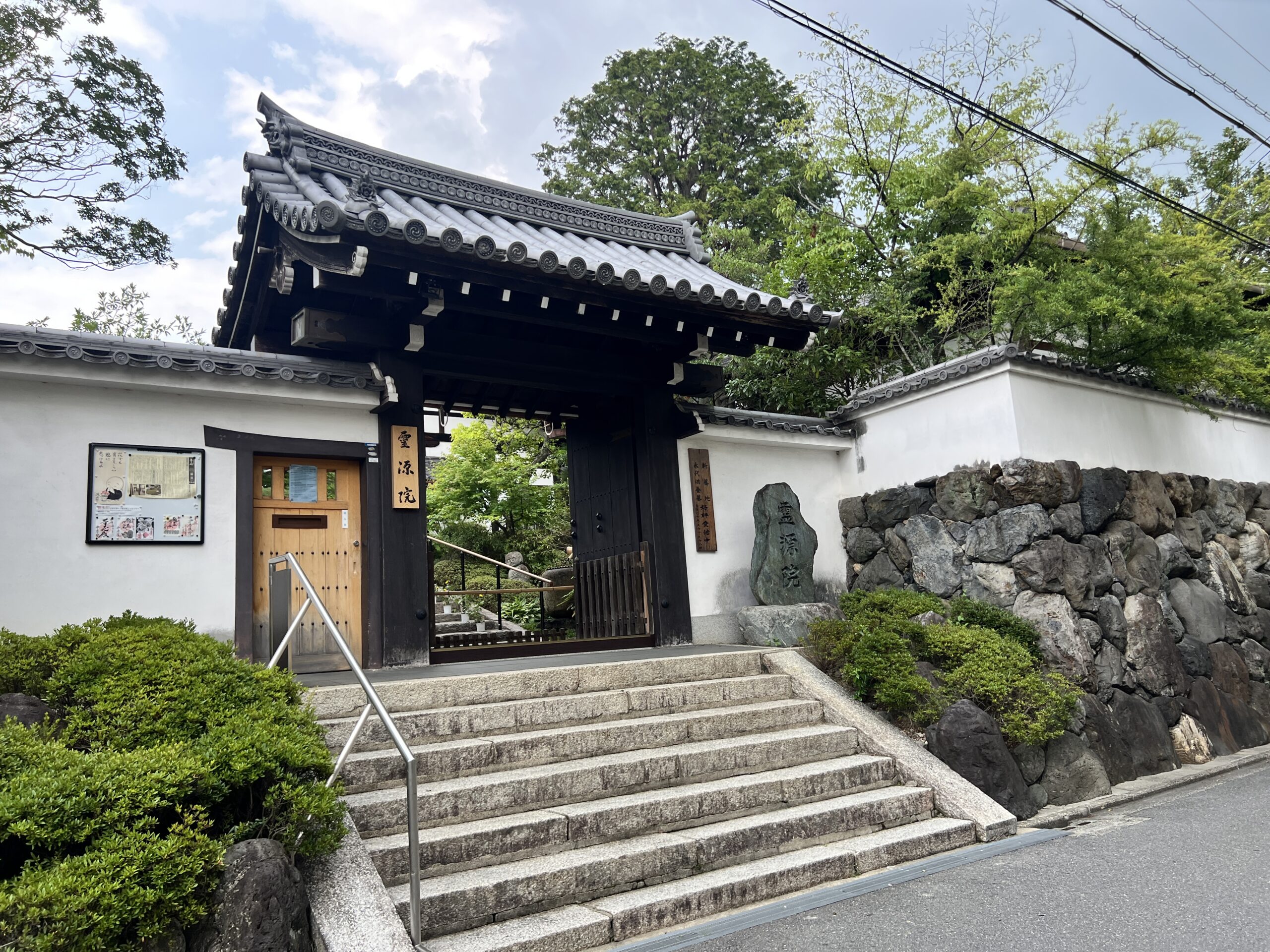
This summer, I received my license at Meian Temple in Kyoto (Myōshinji School, Tōfukuji–Zen’ein Meianji).
On that rainy day, I carefully assembled the two-piece shakuhachi I had carried from America, steadied my breath, and performed one piece at the temple.
Meian-ryu continues to value the philosophy of Suizen , or “blowing Zen.”
To blow the shakuhachi is to meditate. Through sound, one observes the self.
Meian Temple continues to preserve the deep spirituality and historical lineage of Fuke–Meian shakuhachi, and its resonance continues quietly to this day.
Before playing, I sat in seiza for nearly an hour and placed my hands together in prayer before the Buddha.
My shakuhachi is nowhere near being able to “heal others,” but through its sound, it helps guide me on my own Buddhist path.
What the Shakuhachi Teaches Me

The clearer the mind, the clearer the sound.
The tone reflects the heart exactly as it is.
During practice, I repeatedly struggled to switch between octaves (ko and otsu).
When no sound came out, I panicked—and when it did, I became excited, panicked again, and the sound disappeared once more.
I realized the shakuhachi was teaching me something essential about life:
“Do not rush.”
Over time, I learned that shakuhachi is not something to play simply to “become good,” but something to play in order to discover who you are in the present moment .
Practicing thirty minutes a day can sometimes be physically demanding, but just as Buddhist chanting brings peace, the breathing of the shakuhachi has become part of my daily rhythm.
Sometimes the sound comes out terribly, I cry out in frustration, and my rescue cats jump in surprise—but as the poet Mitsuo Aida said:
“Because we are human.” (LOL)
Each time my breath becomes sound and dissolves into the air, I am reminded that I am still alive , and I feel deep gratitude.
📚 Reference Links (English)
* Shosoin Repository (Nara): [https://shosoin.kunaicho.go.jp/en](https://shosoin.kunaicho.go.jp/en)
* Meian Temple (Kyoto): [https://www.meian-shakuhachi.org/](https://www.meian-shakuhachi.org/)
* Fuke Shakuhachi / Komusō monks overview: [https://komuso.com/](https://komuso.com/)
* Tozan-ryu Shakuhachi: [https://tozanryu.com/](https://tozanryu.com/)
* Myōshinji school (general): [https://www.myoshinji.or.jp/](https://www.myoshinji.or.jp/)
* Tōfukuji Temple: [https://tofukuji.jp/en/](https://tofukuji.jp/en/)
#shakuhachi #fukeshakuhachi #meianshakuhachi #suizen #komuso #japanesemusic #traditionalmusic #japaneseculture #zenpractice #breathwork #mindfulnessjourney #bambooflute #kyototravel #culturalheritage #healingthroughsound #wayofzen #spiritualpractice #soundmeditation #japanvibes #musicaljourney #japaneseinstituteofstl #japaneseinstituteofstlouis #JIOSTL #jiostl #japaneseinstitute #kimonoclubstl #kimonoclub #STL #japaneseSTL #japanesestl #monk #deathdoula #meditation #doula #tea #matcha #teaceremony #workshop #hospice #japaneseworkshop #buddhism #kidsactivity