
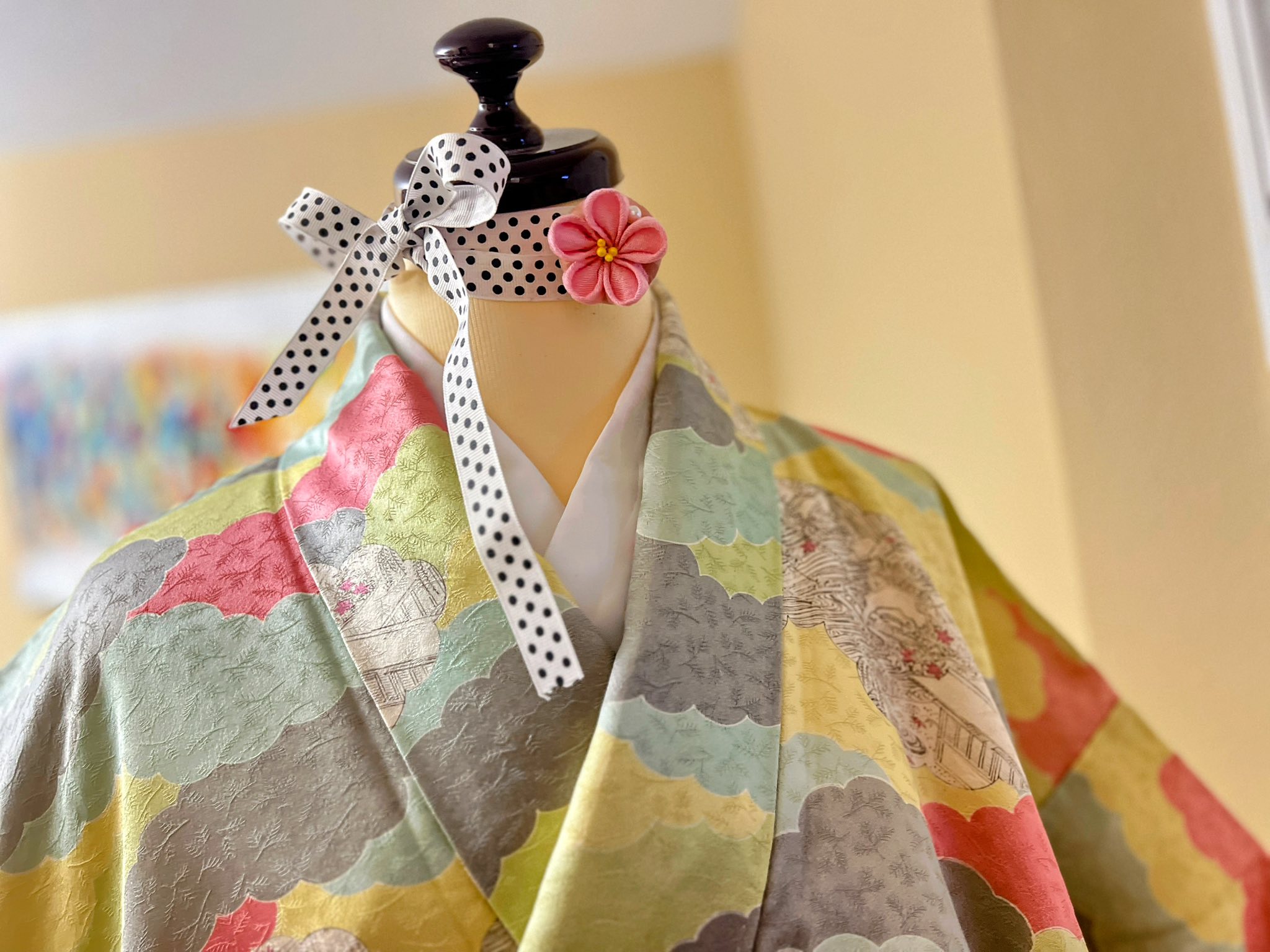
6/29 (Sun) 2-4 pm
To reserve your spot, please use the contact form on our website, send us a message via Facebook Messenger, or DM us on Instagram.
FB Event: https://www.facebook.com/events/1687792002612756
Instagram:@jiostl
What Is *Tsumami Zaiku?”
*Tsumami Zaiku* is a traditional Japanese craft that involves folding and pinching small squares of fabric—often silk—into delicate shapes that represent seasonal flowers and natural scenery. The technique dates back to the Edo period, when court ladies and noblewomen would make them as a pastime. Over time, the art form evolved into ornate hairpins and combs used to decorate traditional Japanese hairstyles.

Today, *Tsumami Zaiku* is no longer limited to silk (*habutae*). It can be made using a wide variety of fabrics like *chirimen* (crepe) or cotton. These fabric flowers are now popular as brooches, hair accessories, and obi clips that complement both traditional and modern outfits. By changing the size of the fabric, combining techniques, and playing with color and texture, the creative possibilities are endless.
The fabric squares used for Tsumami Zaiku are typically only 2–3 cm in size. Many artists, including myself, repurpose old kimono fabric or use leftover scraps from other projects. Every time I come across a small leftover piece of cloth, I think, "Maybe this one still has a chance to shine!" and I tuck it into a ZipLoc bag, saving it for inspiration. For me, Tsumami Zaiku is the ultimate form of eco-friendly craftmaking.
That said, not every fabric works well for this art. So—what kinds of materials are best suited for Tsumami Zaiku?
Chirimen & The Deep Connection to Kyotango
Among the best materials is *chirimen*, a crepe fabric with a softly crinkled texture. Not only does it have a gentle feel, but it’s also easy to fold and pinch, making it ideal for beginners. It brings warmth and dimension to every creation.
My father’s hometown, Kyotango City, is located along the beautiful Sea of Japan. It’s renowned as the production center of *Tango Chirimen*, one of Japan’s highest-quality crepe fabrics. One of my father’s side businesses was related to this traditional textile, so I grew up surrounded by its beauty and cultural richness.
Tango has been a center of silk weaving for over 1,300 years. In the Edo period, weavers from Tango traveled to Kyoto’s Nishijin district to learn advanced techniques, bringing them back to create their own version with a unique textured surface—what we now know as *Tango Chirimen*. The technique spread rapidly across the region, transforming Tango into Japan’s leading producer of silk textiles. Even today, about 70% of Japan’s silk fabrics are produced in this region.
Kyotango, the “City of Centenarians”
Kyotango is also known for something truly remarkable—it has become recognized worldwide as a “miracle city of centenarians.” With 202.51 centenarians per 100,000 people, the city’s rate is over three times the national average. Across the broader Tango region, the figure climbs to an astonishing 228. The secret to this longevity may lie in the clean coastal air, nutrient-rich seafood-based diet, and the strength of community bonds.
*Tsumami Zaiku* is more than just a beautiful craft. Each piece tells a story—of the fabric’s origin, the region’s history, and the hands that shaped it. We hope you’ll join us and experience the depth of Japanese tradition and culture through this timeless art.

Tsumami Zaiku Workshop Info
Let's make Brooch or Hairpin/Hair tie top Making Workshop ?
It could be also arranged as Kanzashi hair stick, magnet, button or netsuke strap at your home later.
Japanese traditional art of folding small fabric squares into elegant floral designs. In this hands-on workshop, you’ll learn how to create beautiful fabric flowers using faux silk.
This is a beginner-friendly class—no prior experience needed!

Fee (Fabric Included)
・Public $35
・JIOSTL Members: $20
・JASWA Members: $30
Who Can Join
Ages 16+ (Under 16 must be accompanied by an adult)
What to Bring
Scissors & tweezers
※Rental tools available upon request
You’ll take your creation home the same day!
Register / Contact via messanger or Instagram
Follow us on Instagram: @jiostl
Website: https://jiostl.org/
✨ Want to go deeper?
If you're interested in learning how to prepare and repurpose antique kimono fabric—washing, drying, untying, ironing, and precision-cutting the fabric (which can be very challenging!)—please reach out for a separate intermediate or advanced workshop. This preparation can take several hours to several days and will be taught as a specialized course.
This workshop is intended for personal use and learning.If you plan to use the techniques for commercial purposes, please contact us in advance. A licensing agreement or advanced-level class may be required. Tagged are always welcomed!